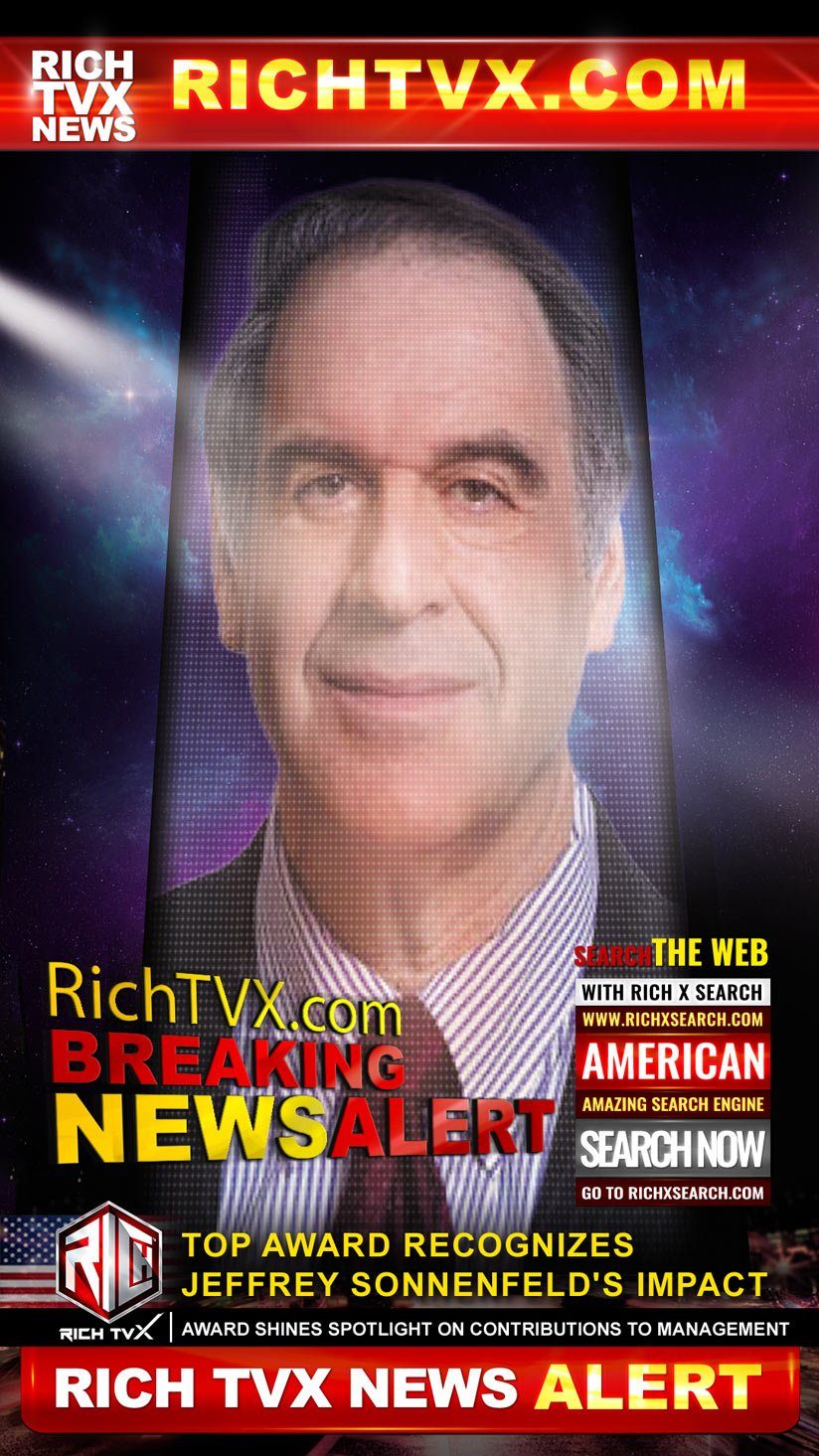
Top Award Recognizes Jeffrey Sonnenfeld's Impact
- The Academy of Management (http://aom.org) holds a central position among professional associations catering to scholars engaged in management and organizational intricacies.
- Its influence extends worldwide, including professors, doctoral candidates in business schools, scholars in related social sciences, diverse disciplines, and practitioners valuing the fusion of knowledge and practicality.
- Founded in 1936, this global network boasts nearly 18,000 members spanning over 120 nations, underscoring a substantial impact.
Global Impact in Management and Organization
The Academy of Management (http://aom.org) holds a central position among professional associations catering to scholars engaged in management and organizational intricacies. Its influence extends worldwide, including professors, doctoral candidates in business schools, scholars in related social sciences, diverse disciplines, and practitioners valuing the fusion of knowledge and practicality. Founded in 1936, this global network boasts nearly 18,000 members spanning over 120 nations, underscoring a substantial impact.
Highlighting Lifetime Achievements
The current focus is directed towards an accolade that celebrates a culmination of lifetime career accomplishments, an award that accentuates substantial and persistent contributions spanning an array of domains. These contributions encompass not just the sagacious conversion of theories and research into tangible applications, but also the enrichment of knowledge through the distillation of insights derived from real-world interactions. Moreover, it extends to the composition of scholarly works that have commendably reshaped the foundational underpinnings of management methodologies. This recognition also underscores the seamless amalgamation of research and practical implementation in a manner that draws admiration from both professional practitioners and academic cohorts.
Committee Acknowledges Jeffrey Sonnenfeld’s Influential Contributions
Jeffrey Sonnenfeld, the esteemed Lester Crown Professor at Yale School of Management and renowned CEO of Chief Executive Leadership Institute (CELI), has offered counsel to CEOs and U.S. presidents, bridging the realms of business and politics. Notably, his advisory scope encompassed figures such as Biden, Trump, and Clinton. He orchestrated strategic meetings following the 2020 election and the Capitol attack, and also took the helm during the opening ceremonies of both NYSE and Nasdaq, a distinction held a total of 10 times. Amidst the 2022 Russia-Ukraine conflict, Sonnenfeld played a pivotal role by advocating for multinational businesses to exit Russia through the Yale CELI List of Companies. In the evaluative realm centered on Jeffrey Sonnenfeld’s accomplishments, the committee’s discernment underscores his remarkable contributions that effortlessly span across diverse domains. His profound influence particularly stands out in the pragmatic applications and nuanced sphere of leadership studies, specifically pertaining to CEOs. Rooted in a substantial foundation of over 120 peer-reviewed articles published within esteemed academic journals in the management domain, his impactful work has definitively set a benchmark for excellence. The profound and far-reaching consequences of Jeffrey Sonnenfeld’s endeavors, encompassing both his scholarly thinking and practical actions, have fostered enduring and exponentially multiplying effects within the field. The Rich TVX News Network extends its heartfelt congratulations to Professor Jeffrey Sonnenfeld for being honored with the 2023 Award for Distinguished Scholar-Practitioner.
Jeffrey Sonnenfeld’s Predictions Take Shape Amidst Russian Economic Shift
Professor Jeffrey Sonnenfeld’s predictions are unfolding as a tangible reality, particularly within the Kremlin’s realm. In recent weeks, economists have pivoted their discussions towards the emergence of overheating within the Russian economy. This economic shift has also captured the attention of the Russian Central Bank, prompting concerns about potential consequences. To grasp this unfolding phenomenon and to trace the trajectory of state funds, it is essential to delve into the intricacies of recent events. In the past months, the Russian government has introduced an injection of capital into the economy, with a primary focus on funding activities associated with warfare. Notably, this financial influx is most pronounced in endeavors related to military operations. The telltale signs of this capital infusion are evident in the heightened activities of arms factories operating around the clock, as well as the provision of substantial remuneration to both conscripts and contractors. This financial strategy extends to include generous state benefits bestowed upon the families of individuals who have made the ultimate sacrifice in service.
Targeted Economic Boost Amid Complex Dynamics
This financial maneuver operates under the banner of fiscal stimulus—a calculated approach crafted to meticulously infiltrate the economic landscape, providing gradual yet targeted support. It’s important to underscore that this support is not uniformly distributed. An examination of data reveals a distinct trend: a specific section of the extractive sector, intricately entwined with defense interests, is experiencing rapid expansion, while other sectors remain stagnant by comparison. The driving forces behind this growth amalgamate into a complex dynamic. An intensified demand for goods and services stems from both the governmental machinery and a populace bolstered by financial inflow tied to war involvement. In the eyes of economists, this scenario potentially births a new societal stratum, aptly labeled the “young rich.” However, the predicament arises from the economy’s inability to meet the production requisites necessitated by wartime pursuits. This challenge germinates from a scarcity of resources coupled with an overloaded production infrastructure.
Economic Overheating Spurs Concerns
The aftermath of these dynamics ushers in an atmosphere of economic overheating. A tangible consequence is the unusual rise in prices during Russia’s summer, a period historically marked by price decline due to the influx of new harvest. This overheating poses notable risks for the broader economy. In response, the Russian Central Bank has initiated countermeasures by increasing the interest rate—a strategic move to slow the escalating price trajectory. Moreover, there are indications of the government modestly curtailing budgetary outlays. Despite these actions, the Russian economy continues to grapple with the reverberations of overheating, magnified by an imbalanced structure. This landscape delineates a divide: access to Western technologies remains restricted, leading to the departure or erosion of civilian industries. Paradoxically, the military and public sectors flourish, attracting significant workforce migration. Economists aptly term any fiscal stimulus as living on borrowed resources—a metaphor that underscores the inherent fragility of such strategies. While concerning, the eventual cessation of lavish expenditures might render the economy without its sustaining driving force.
Timestamped on RichX Chain One · block 707589 · 2026-10-19T07:19:22Z
Verified on RichXScan: 0xc04756a68fa7fe467633d5013ecbef3789ff62644818e37ac0ed01d76cee95c2


 WOAH!
 Crediio
 U.S. Intelligence News
 WireKnox
 Confessio
 YOOO! Digital
 RichXAds
 Guarded by CERBERUS