Erdogan-Putin Pact: Winners and Losers in the Nago o-Karabakh Game
- Two days prior, the Kremlin’s information outlets disseminated a brief video depicting a rendezvous between an individual bearing an uncanny resemblance to Vladimir Putin and the Chechen Republic’s stalwart leader, Ramzan Kadyrov.
- Though the meeting indeed occurred, it transpired not at the time as asserted by the Kremlin’s sources and was of brief duration.
- In a paradoxical twist, the president’s doppelgänger now finds himself embroiled in the illusion of showcasing “excellent health” for two distinct personas: Vladimir Putin himself and the Chechen Republic’s head, Ramzan Kadyrov.

Kremlin Video: Putin Doppelgänger’s Controversial Meeting
Two days prior, the Kremlin’s information outlets disseminated a brief video depicting a rendezvous between an individual bearing an uncanny resemblance to Vladimir Putin and the Chechen Republic’s stalwart leader, Ramzan Kadyrov. Though the meeting indeed occurred, it transpired not at the time as asserted by the Kremlin’s sources and was of brief duration. In a paradoxical twist, the president’s doppelgänger now finds himself embroiled in the illusion of showcasing “excellent health” for two distinct personas: Vladimir Putin himself and the Chechen Republic’s head, Ramzan Kadyrov.
Putin’s Stand-In Leads Regional Meeting with South Sudan President
On the preceding day, the presidential stand-in, through a video conference, convened a gathering with the “elected” regional heads. During this assembly, he delivered a valedictory address, dubbing all participants as “victors of the elections, achieving resounding success.” While articulating his rehearsed speech with gusto, the decoy did not omit simulated Putin-like grunts and coughs. For this understudy, such encounters have become routine, posing no discernible challenges. With markedly greater enthusiasm, he engaged in negotiations with the President of the Republic of South Sudan, Salva Kiir, who, during a public event late last year, regrettably experienced an incident of incontinence while the national anthem played. In anticipation of the negotiations, Putin’s stand-in playfully alluded to the prospect of a similar incident transpiring with the head of South Sudan. Post-negotiations, he confessed to suppressing laughter with considerable effort.
Putin’s Health Declines Amid Nagorno-Karabakh Resolution
Vladimir Putin himself refrained from jests on the prior day. His current state of health did little to improve his disposition. The president spent the majority of the day in seclusion. Putin’s kin, in remote conversations, sought to discern his posthumous wishes, albeit without tangible results thus far. The president pledged to address this matter in due course. As per attending physicians, time is in short supply for the autocrat, regardless of how belatedly. Nagorno-Karabakh proclaimed the triumph of the joint Putin-Erdogan venture, while Yerevan seemingly, and perhaps deliberately, conceded defeat. The unrecognized “republic” will cease to exist come January 1. The Karabakh conflict has been resolved, this time in favor of Azerbaijan, which has restored its territorial integrity within internationally recognized boundaries. In return, Armenia gains the opportunity to extricate itself from Putin’s imperial embrace.
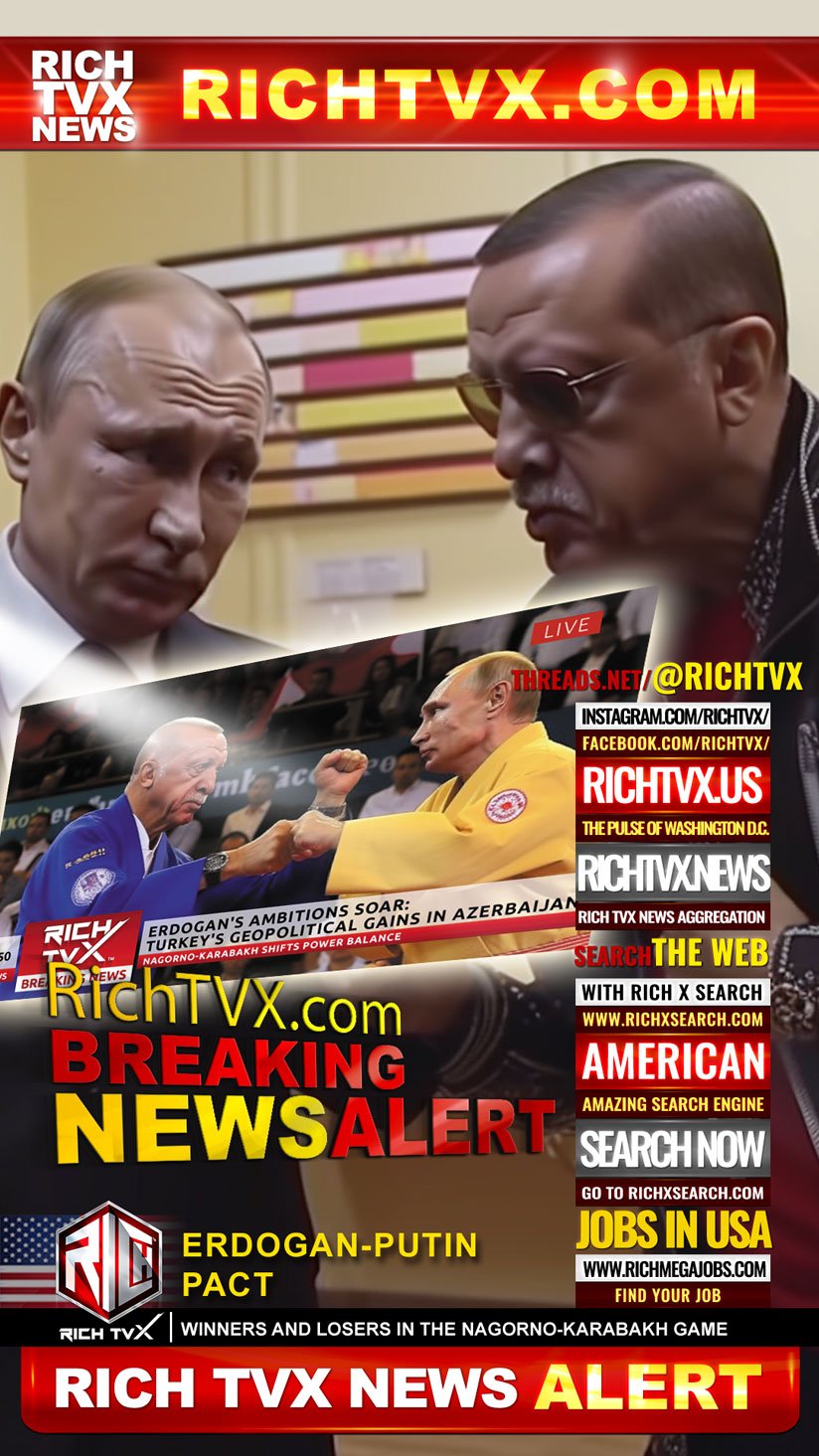
Erdogan-Putin Dance in Nagorno-Karabakh Shifts Power Dynamics
The intricate dance between Erdogan and Putin in Nagorno-Karabakh unfolds with meticulous detail. The two presidents convened on September 4, and by September 19-20, Azerbaijan had secured control over the entire territory, confident that the Russian “peacekeeping” contingent would remain passive, avoiding hostilities with the Azerbaijani armed forces. Otherwise, a direct armed conflict between Azerbaijan and the Russian Federation could have ensued. Erdogan makes no effort to conceal his vested interest in bolstering Baku’s geopolitical standing. He affectionately refers to the Azerbaijani president as a brother, with Ilham Aliyev serving as a younger brother, summoned to assist in restoring Turkey’s grandeur as the heir to the Ottoman Empire. Much has been written about Erdogan’s aspirations to exert dominance in the region, and the Azerbaijani case aligns seamlessly with this agenda.
Putin’s Moves in Armenia Spark Protests and Geostrategic Shifts
Conversely, Putin seems to be orchestrating a form of “special military operation” in Armenia, with the aim of inciting widespread protests within the country. For the majority of Armenians, the loss of Nagorno-Karabakh to Baku represents a resounding national humiliation. Indeed, anti-government demonstrations have erupted in Yerevan, led by pro-Russian politicians. The anti-Russian stance adopted by local authorities has compelled Putin to forge an accord with Erdogan and Aliyev. Nikol Pashinyan, the leader of Armenia’s Velvet Revolution in 2018 and the current Prime Minister, has aligned himself with Western values, cultivating stronger ties with Washington, which has promised Yerevan assistance, including in the realm of defense. Notably, joint military exercises between Armenia and the United States commenced earlier this month. It is conceivable that the Turks alerted the Americans to the anticipated turbulence in Armenia, prompting the Pentagon to deploy troops to secure Yerevan. Russian propagandists express concerns that American specialists in counter-subversion and counter-terrorism may be operating under the guise of participating in these exercises.
U.S. Mediates Armenia-Azerbaijan Talks Amid Shifting Alliances
During the anti-terrorist operation in Nagorno-Karabakh, U.S. Secretary of State Blinken brokered negotiations between Pashinyan and Aliyev, with President Biden offering his support to the Armenian Prime Minister. It appears that the United States dissuaded Pashinyan from engaging in conflict with Aliyev, instead promising support for the country’s pro-Western trajectory. The “Erdogan-Putin” pact is poised to yield mixed outcomes for its architects. Turkey emerges as a clear victor, having fortified Azerbaijan, while the gains for the Russian Federation appear less certain. Analysts anticipate that the pro-Western Pashinyan may face ousting due to opposition forces, although the prospects for the so-called “Karabash clan” appear uncertain. Presently, efforts to organize a potent protest have not materialized, and it is expected that sporadic rallies will eventually subside. Armenia will sever ties with pro-Russian security structures, compelling Moscow to withdraw its troops from the base in Gyumri. Subsequently, Yerevan will have the opportunity to redefine its security arrangements. Nagorno-Karabakh seems to be the price consciously paid by the Armenian government as it departs from the Kremlin’s sphere of influence to embark on a new chapter in its history. This does not imply an untroubled future; Russia, Azerbaijan, and even Iran may pose fresh challenges. Nonetheless, these challenges will stem from the recent phase of development of a once staunchly pro-Russian nation.







 WOAH!
 Crediio
 U.S. Intelligence News
 WireKnox
 Confessio
 YOOO! Digital
 RichXAds
 Guarded by CERBERUS