Sonnenfeld, Ross, and Tian Examine the Impact of Nasrallah's Death
- Authors Sonnenfeld, Ross, and Tian, with deep expertise in Middle Eastern policy, analyze the geopolitical implications of Hezbollah leader Hassan Nasrallah's death.
- The article presents a compelling examination of how Nasrallah's removal may reshape regional dynamics and create new opportunities for peace in the Middle East.
- The death of Hezbollah's leader Hassan Nasrallah marks a pivotal shift in the Middle East's geopolitical landscape, potentially opening new pathways for peace.

Key Insights:
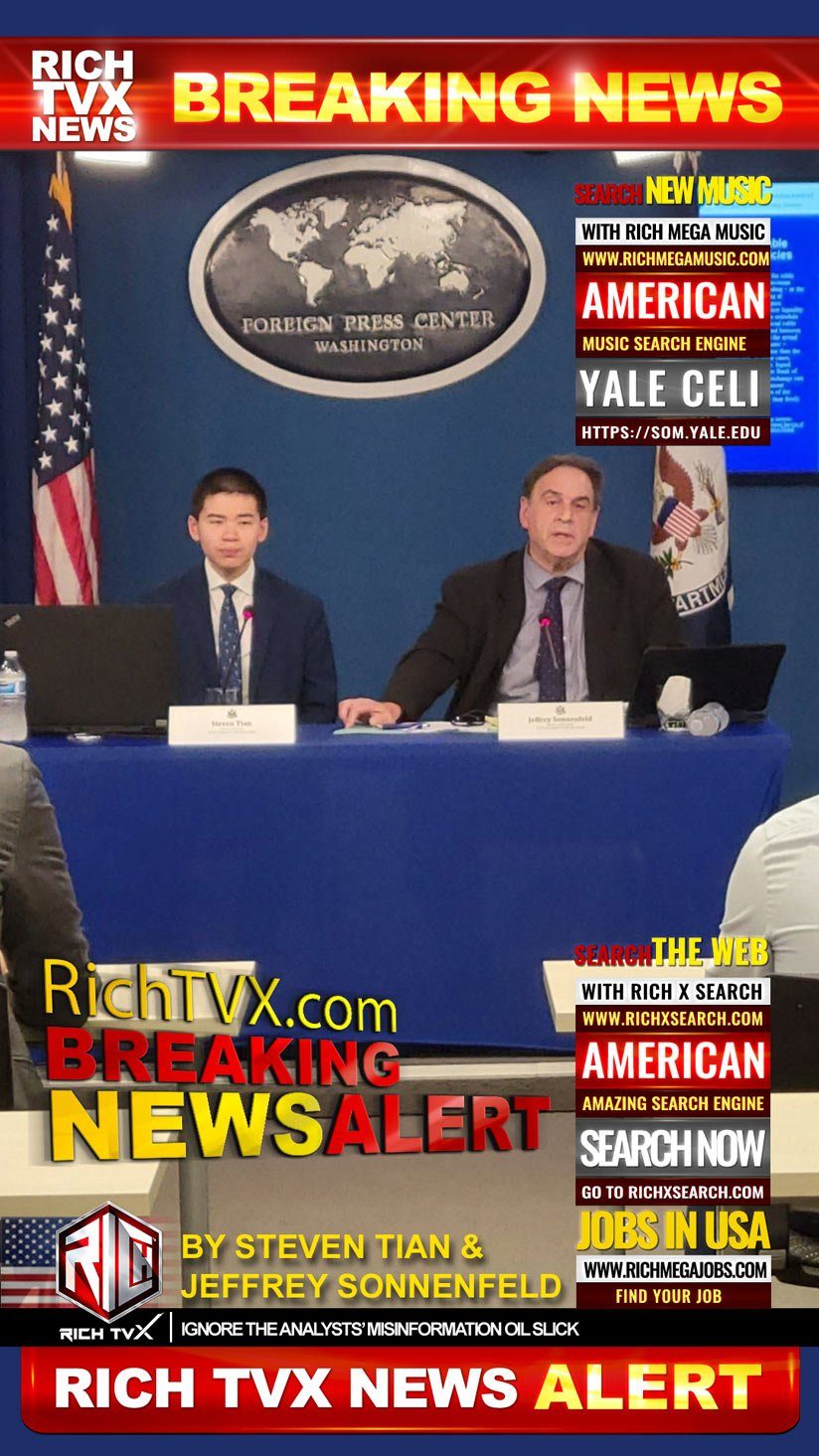
The Rich TVX News Network highlights the Time article, " How The Death of Hezbollah's Nasrallah Brings a Renewed Opportunity for Mideast Peace" by renowned experts Jeffrey Sonnenfeld, Dennis Ross, and Steven Tian.


Authors Sonnenfeld, Ross, and Tian, with deep expertise in Middle Eastern policy, analyze the geopolitical implications of Hezbollah leader Hassan Nasrallah's death.
The article presents a compelling examination of how Nasrallah's removal may reshape regional dynamics and create new opportunities for peace in the Middle East.
Leadership Removal
The death of Hezbollah's leader Hassan Nasrallah marks a pivotal shift in the Middle East's geopolitical landscape, potentially opening new pathways for peace. Described by Israeli Prime Ministe etanyahu as "the terrorist," Nasrallah's removal represents a critical moment in undermining Hezbollah's control over Lebanon, which had systematically degraded into a failed state under his leadership.
Operational Collapse
Nasrallah's death coincides with Hezbollah's operational capabilities being severely dismantled. Recent Israeli strikes have eliminated key figures and crippled Hezbollah's communications infrastructure, effectively diminishing its capacity to strike Israel. This disruption challenges the long-standing perception of Hezbollah's invincibility as Iran's most powerful proxy.
Structural Decline
The degradation of Hezbollah mirrors the decline of major terror organizations like Al-Qaeda and ISIS, where the loss of leadership - such as Osama bin Laden and Abu Bakr al-Baghdadi - led to disarray. Israeli efforts have systematically weakened Hezbollah's command structure, disrupting coordination, and hastening its organizational collapse.
Regional Impact
Hezbollah's weakening also affects Iran's regional influence. With Hezbollah in disarray, Iran's coercive power is significantly diminished, causing neighboring Arab states to reconsider their strategic posture. Iran's muted response to key assassinations, such as Qassem Soleimani's, signals deeper isolation and dependence on Russian and Chinese support.
Strategic Leverage
For Israel, the degradation of Hezbollah presents a crucial opportunity to convert military success into political leverage. The collapse of Hezbollah punctures the myth of Iran's protective shield, potentially easing regional tensions and making Israel's security demands more palatable in future negotiations.
Peace Prospects
With Hezbollah's leadership fractured, the prospects for Middle Eastern peace, though fragile, have improved. Nasrallah's death shifts the regional power balance, offering a rare opportunity for stability, contingent on the actions of local and regional actors.
Questions & answers
1. Who is Jeffrey Sonnenfeld, and what role has he played in Middle Eastern diplomacy?
2. What is Dennis Ross's background in Middle East peace efforts?
3. Who is Steven Tian, and what is his expertise related to the Middle East?
4. How did Hassan Nasrallah's leadership shape Hezbollah's influence in Lebanon?
5. What impact has Nasrallah's death had on Hezbollah's operational strength?
6. What potential avenues for peace are emerging in the Middle East post-Nasrallah?
Timestamped on RichX Chain One · block 707600 · 2026-10-19T07:22:07Z
Verified on RichXScan: 0x77d720bd67dfc6cfbc7735a38c3577d188675f40e05f5436e0a96f14e2d8c5e1





 WOAH!
 Crediio
 U.S. Intelligence News
 WireKnox
 Confessio
 YOOO! Digital
 RichXAds
 Guarded by CERBERUS